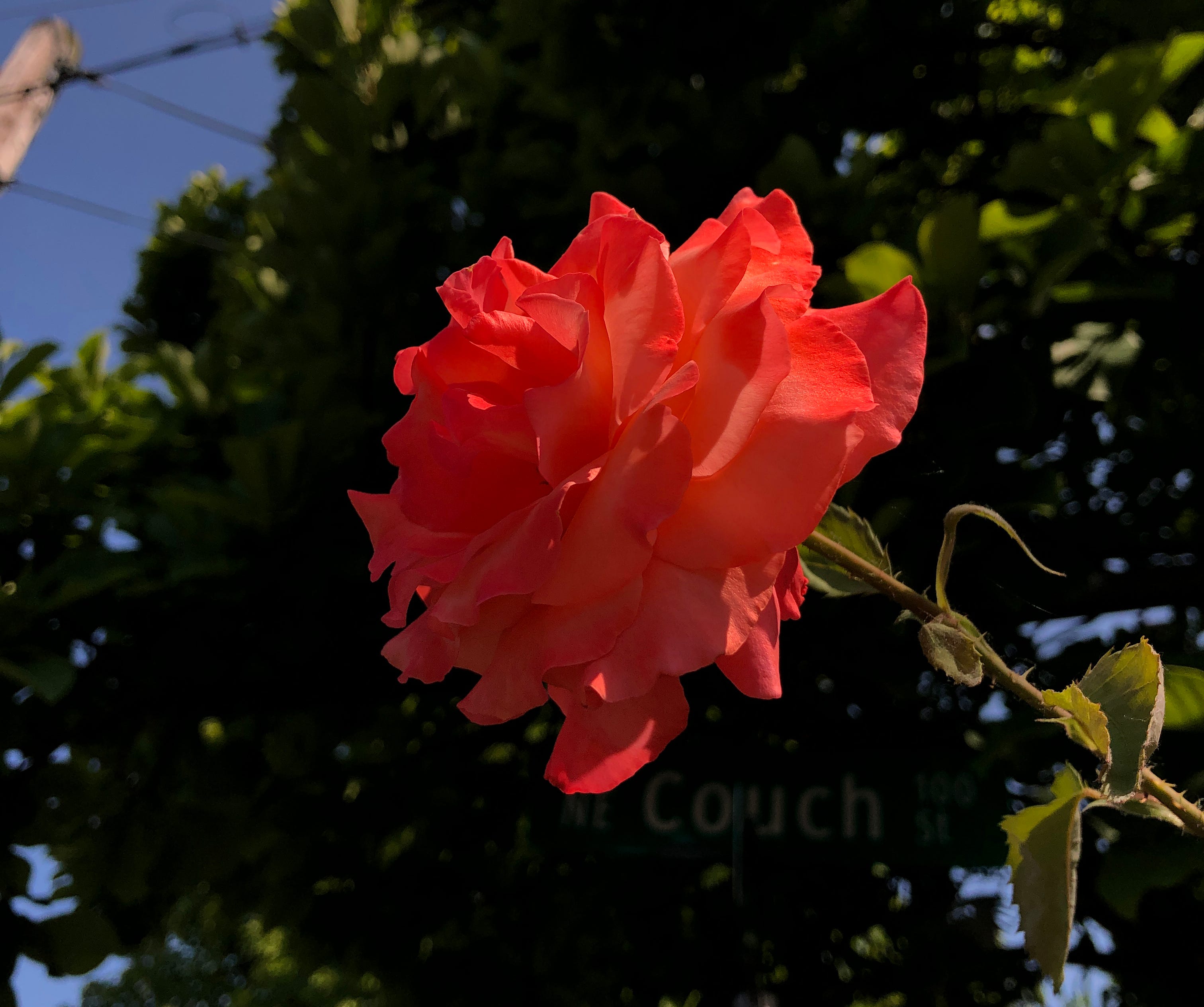
At the beginning of August we returned from Portland, my hometown, after spending a gorgeous 2 weeks milling about. It’s quite a feat to say you were born & raised in Portland, as the early 2010’s saw an onslaught of migration from adjacent states into Oregon. The city was impacted in more ways than can be listed here, both for the better, and for the worse. Like many of us who are originally from Portland, we no longer live within its beautiful confines, but instead we spread our wings to see what lay beyond the walls of the City of Roses.
Anyone whose interest is piqued by our origin locale, we wax poetic about a city whose drudgingly long overcast rain filled winters metamorphose into the lushest of green summers you’ve ever experienced, striking the perfect balance between dry and humid heat. “You gotta be able to handle the rain; the 38 degrees and light rain wears on you” we tell them. “Visiting? Go in July or August. Planning on moving there? Go in January or February; those are the worst weather months of the year.” All things I’ve mentioned in passing to people who ask about the city, far too many times to count.
Traveling back ‘home’ (as of this writing, Brooklyn) from anywhere always carries an elated high; an almost new perspective on life. Mindfulness plays a significant role. The flowers on the corner street are highly contrasted, exaggerating joy throughout your system. Small details on the buildings catch your eyes, relishing in their beauty. Here, an appreciation for the things you once found insignificant, are now re-energized by the experiences you’ve had. It’s as though you’ve become a new person, reborn of radiant light, a fresh mentality.
The feeling, this high, is so often fleeting. Within a few days, the monotony of daily life begins to creep its way back into your system. Without notice, you seemingly return to the regular operations found prior to your vacation… As though nothing has changed, as though the experiences you previously held never had any suitable impact on your character.
When discussing this phenomenon with others, I often feel alone in this once seemingly shared experience. This was solely true when living in Ukraine. Here I was, living out a dream envied by many, and still I found myself stifled by daily life amidst Eastern Europe.
///
My life in Portland, prior to Ukraine, had a healthy solid foundation, with a tight knit community of people I loved dearly and who loved me. On my own volition, I was instantaneously flung out to an undoubtedly beautiful, but extremely different, country, where everyone was a complete stranger. No acquaintances, or ties of any kind upon landing in Ukraine.
Though, it would be a disservice to say the first several months were a nothing but non-stop thrill ride. Everyone wanted to meet me, and at once, drink with me too. This period of time is more generous than could ever be encapsulated here. Ukrainians are masterfully gracious hosts. Strangers soon became friends, and are still among some of the best people I know to this day. Despite a Ukrainian’s cold exteriors, to open your doors and hearts to a complete American stranger is a testament of trust and compassion.
If you’ve ever been out hiking in the Portland area, ad hoc interactions with strangers are typically uninhibited. Gesturing a smile, or a good morning, to those in passing on the trail would be commonplace. Yes, while this may be ubiquitous throughout the US, the experience has never been more perceived than in the Pacific Northwest. Discussing your day with the random barista at the coffee shop you stumbled into would be nothing out of the ordinary, nor would any social interaction encountered throughout your day.
This behavior was non-existent in Ukraine, almost dismissed. Even smiling in public was looked upon as being mentally deranged - I learned after being told my smiling too much was suspicious. After months of daily appearances at the coffee shop next to the brewery, they finally recognized me, a registration of ‘the American brewer from Pravda’. These instances could be attributed to the low trust societal behavior gleaned from the Soviet Union, and the personality one forms from such a mentality. But living amongst it, there was a feeling of being stripped of something so genuinely personable.
The brewery was consuming a lot of my energy. Pressure was built solely by myself to ‘prove’ who I was to this new country (and the infancy of the craft beer industry within it). Who was I, some American late-20s kid, to come into Ukraine and try to change the perception of craft beer? This thought knocked around in my brain quite frequently, but simultaneously propelled me towards being a better brewer, ingesting any and all knowledge possible. The focus on bringing Pravda to absolute perfection was weighed against my own mental stock. The accomplishments & accolades gained were met with ‘not good enough’ from myself, rather than a pat on my own back. Although its awareness is known, the mindset is still engrained to this day.
After some time, the excitement of being somewhere new died down. A routine began to take form, and my independent devices shined through. Exploring the city of Lviv became my pastime; no surprise to anyone there. My apartment became a gluttonous nostalgic sanctuary. An avenue to escape the cultural differences, and feel reconnected with myself. Music played with reckless abandon, while cooking the comfort foods I pined for back home. Six months or so of living in Ukraine, and my life was indicative of borderline hermit behavior. The weight of loneliness never felt heavier.
Occasionally, it became difficult to define a distinction between Ukraine & anywhere else. Slowly a disassociation with myself was manifesting. A fracture of persona persisted; my job personality, and my regular one. The former was more focused, more stressed, more perfectionist. When one applies this head down, best foot forward type of mentality, bent on pushing yourself towards a better future, you find your surroundings beginning to blur. Everything was beginning to culminate, and it carried a tremendous effect on my well-being.
During mid-summer, and the American holiday season, my feet were planted back in the US for a few weeks. Upon returning to Portland, it was as though the mounting pressure valve in my head was finally released. I was home; I could finally rest. Amongst friends and family, the synapses of ‘regular’ began to fire again. An undisturbed root of myself began to grow, and in a cliche way, started to bloom. The apparition of my job personality began to shed its skin, and there was a feeling of wholeness with my body. The weeks went by swiftly, and were never long enough.
Returning from vacation, my spirit was filled to the brim with energy. Something needed to change, to keep this effervescent energy flowing. What better way than to brainstorm on pen & paper. A fiery list of ideas was scrawled out onto my journal. The list sought ways to simultaneously create improvements (boundaries) on my present life, while tackling side projects previously scribbled down. With my energy level reinvigorated, my heart would beam with the cliché “Things would be different!”.
And for some time, they were. My mood would be balanced and calm, and the world had a lustrous glow. The previous irritations of Ukrainian culture felt trivial and peripheral, and in a way there was a sense of existence in this space. The path ahead was visible & clear. Sound familiar? Incrementally, and without notice, the feeling subsided. Distractions from the brewery created gaps in my boundaries, and personal side projects gathered dust in my notebook, stealing glances at its pages from time to time with a sigh. Without a foundational system to keep myself in check, it wasn’t soon before long, the antecedent doldrums of my pre-vacation mentality began creeping back in with ease. The pestilent cycle would begin again.
A fond memory of mine relates kindly with this subject. Speaking with a Ukrainian friend of mine, they asked how my vacation to the states was over one summer. While I stumbled to find the perfect words to explain my stay, they had found them for me. My friend began explaining every return to Ukraine from vacation always seemed like I was a bit lost - not in the sense of direction sought, but in the sense of being jolted awake from a deep sleep, my awareness in a fog. Their apt analysis continued. Being back in the US, it must feel like Ukraine is some strange fever dream, or a disjointed memory you’re trying to sew together as the pieces fade from your mind. My friend had taken my jumbled thoughts, and formed them into succinct articulation. Ukrainians were good at that.
When one of the servers, who worked in the brewery restaurant, asked me if Ukraine was being ‘heavy’ on me, I gave her an inquisitive look and questioned why she asked. She had been at Pravda before my arrival. She saw my whole development in the country, especially at the brewery. “You never smile anymore! We miss your smile!” she expressed with a gloomy look. My heart sank. At this point, I knew my days in Ukraine were dwindling.
The above may convey my time in Ukraine as nothing but complete misery. This is not the case, but in fact the contrary. This insight is only an attenuated view of my mental struggles living in a world so vastly different from origin, and the impulsive adjustments there in tune. Living in another country is an experience that will never be replicated, but also necessary for anyone given the privileged opportunity. The notion is quite romanticized, yet there’s something transformative about finding yourself amongst the thicket of deracination.
Some of my fondest memories derive from my time in Eastern Europe, dispensing light on darkened days. They were some of the best years of my 20s, if not my life. My love for Ukraine, and its people could be written in fervent detail, but then this post would never be finished. To this day, my experience in Ukraine feels just like my friend had identified it - a fever dream.
///
Reminiscing on my time in New York as a whole, my behavior skirts along the edges, and is occasionally paralleled, with Ukraine. Is it possible New York and Ukraine share stark similarities? With all 5 boroughs closing in on almost 9 million people (29k people per sq mile - dense), you’re consistently inundated with all the commotion that tends to piggyback with such a high number. Noise, lack of space, and constant overstimulation, naming a few. All of these factors lead to seeking shelter in the privacy of your own space, to dissociate from the chaos.
The biggest, in my mind, is loneliness. Last year, the NYC health department released a survey saying 57% of New Yorkers felt “ lonely some or most of the time”. At first glance the idea seems backwards, but despite the sheer number of people living in the NYC area, it’s difficult to meet like minded individuals. The pandemic sure didn’t do a lick of good either. Even within social circles, the conversations can be lacking true connection and are often fleeting. People have a tendency to keep to themselves, like mentioned above, and/or are wound up in the construct of ‘making it’ in NYC. Appearing busy is a natural pathway for avoidance and self defense in the city. This tendency leans towards lower trust behavior.
When comparing Ukraine, and New York, it makes sense why two feel so alike in ways, especially when overlapped with my past. Returning from another locale, this surreal inebriation of happiness manifests in the same format. The surrounding world is finally crystalline and vivid, navigating through it as if walking on a cloud. Transcendental may be a bit on the nose, but you get the idea.
Reveling in the feeling of this vacation high has left me with more questions than answers. What are the underlying issues of these convictions? What is the psychology behind this high? Is this depression? Is this the knowledge of societal weight and subjectivity? The lack of something, rather than the need? Why do we become so disenchanted by the life surrounding us? How do we gain a perspective that tunes us into a station in which we appreciate, well, everything - even if it isn’t the rocky hillside beaches of Oregon, or Carpathian mountains of Ukraine. The more effort put forth to dissect this illusive phenomenon, the more I fear the high slipping out of my grasp.
The initial research discovered wasn’t very divulging, and was a bit short lived. Extending the post-vacation high upon your return, or ways to replicate the feeling in the first place, was fairly prolific in my findings. A 2010 study found “…Only a very relaxed holiday trip boosts vacationers’ happiness further after return. Generally, there is no difference between vacationers’ and non-vacationers’ post-trip happiness.” If there was a boost in happiness, the effect lasted less than a month’s time.
This is almost the opposite of the ‘Post Vacation Blues’ many experience after a trip. Coming home post vacation means bearing the weight of multiple responsibilities; a return to the things we sought to get away from by taking a vacation. The thrill is over, and we’re bummed about it.
A felicitousconcept did show up while researching, though: The hedonic treadmill, or more formally, hedonic adaptation. From the article, the concept is described as
“…an adaptation-level phenomenon, which is a term that describes how humans become insensitive to new stimuli, and quickly readjust to an emotional baseline. Therefore, the stimulus needed to create an emotion—like happiness or excitement—needs to be more intense than the last stimulus in order for someone to feel its effects.”
Simply put, we will always return to our standard happiness level, despite the highs & lows of our life. For example, researchers found winning the lottery proposed an overall uptick in happiness, but the novelty wore off after a year, their state of happiness returning to baseline. In relation to our own lives, completing a half marathon, or engaging in a new hobby, can elicit the same response. The new pleasure may bring enjoyment, but the effect wears off over time. You become accustomed to its presence, and the pleasure is quickly adapted back into your baseline happiness level.
Hedonic adaptation also transpires in the small pleasures we enjoy or encounter on a regular basis.
“If you have the same meal every day for a week, for example, you’ll likely find it to be less pleasurable by the end of the week. This is true for roller-coaster rides, fresh flowers, drinking tea, listening to a favorite song, watching videos of adorable animals, and many other pleasures.”
The hug of death, highway eyes, or too much of a good thing. It’s why your new pair of shoes stay looking fresh for weeks, spot cleaning them religiously after every outing, but soon lose their luster and become dirty over time. It’s not as though you lose your love for the shoes, but more so the exhilaration of owning them has dwindled, and keeping them clean isn’t a priority. It’s about the shoes, but it isn’t about the shoes.
If overindulgence, and/or losing interest, is the issue, could the opposite be true? Not specifically under indulging, but disengaging completely. Would leaving for a period of time be a temporary solution? By physically returning later with fresh eyes, maybe we could reinvigorate our present surroundings. A peek into the underlying psychology behind the famous saying “Absence makes the heart grow fonder.”
Hedonic adaptation seems to be the psychological reason for the emotional ride we unconsciously consent to throwing ourselves onto during vacation. During the trip, we achieve the enlightenment of disengagement from our present-past. New experiences & memories are gained, stimulating neural pathways, encouraging serotonin flow. Quite possibly, by traveling, we detach from the hedonic adaptation of our home, and the subsequent surroundings. Our time traveling is filled with new stimuli, distracting us from our daily attachments.
Psychologically, this is why returning from Portland, a place unabashedly my purest form of locational comfort, would reinvigorate my spirit. My needs are fully met, my routine is broken up, and the distractions are constant. There’s an overindulgence on the collision of past & present, as reminisces of past memories are waxed poetic with friends. Being on vacation is relinquishing responsibilities, disconnecting, and freeing. Unconsciously, there lies an inclination to contrast the differences of Portland to NYC, leading down the dirty road of comparison being the thief of joy. We all mindlessly roister in the grass is greener fantasy, especially on vacation. Returning to Brooklyn, my surroundings are renewed, fresh, and seen in a different light. At least, for a short period of time.
So what can be done to mitigate the psychological concept of the hedonistic treadmill? Awareness is so substantially key. It’s knowing the new [insert object of desire] will only bring you temporary relief/happiness, but will never fulfill you. Even the experiential idea of travel! On occasion, it’s a facade built with avoidance of the real core issues stemming in your life in mind. Focus on yourself, and the things that bring you fulfillment. Knowledge is power, but more so it’s what’s done with the knowledge that’s the most powerful. The truth will set you free.
///
During therapy, we often talk over my fear of ‘wasting time’. For myself, there’s always something to work on. This crippling notion that every moment must be spent in some productive manner.
The issue evolves further when trying to decide ‘what’ to do, especially if the task is gigantic or daunting. Instead of being able to choose one task and tackle it, my mind is stuck attempting the order in which the tasks should be completed. The problem is exacerbated with the amount of time left in a given day. Internally over exaggerating the length of a task becomes a driving factor, sending me down the spiral even further. My mind, translating further to my physical body, is stuck on a loop.
My mind often recalls this specific part in the show ‘The Haunting of Hill House’, when the model of their ‘Forever Home’ is nudged off the table, breaking into fragments scattered across the mortuary floor. The father falls to the floor, scrambling the pieces into a pile, while repeatedly exuding this almost hysterical ‘I can fix this I can fix this’; an analogy & foreshadowing of/into the literal relationships with his family. When my mind gets caught in a loop, this is the exact sentence replaying in my head, my hands hypothetically grasping for some solid foundation.
A case has been made against my brewing career as a prime suspect in this disposition, though the issue has metastasized into something more ambiguous. Grief also plays a significantly major role. Though, grief doesn’t need the satisfaction. Beer manufacturing conditioned me to translate my down moments into productive use. For example, while the start of an active boil might occur during lunch, this time may also be imperative for prepping a fermentation vessel for the transfer of boiled wort (sugar water) into said tank. Adorning multiple clocks in your head is normalized, and every second is accounted for, especially if you’re a one person show. The fast paced environment is mentally stimulating, but the process changes your perspective on how you operate outside of brewery life. Over the last several years, I’ve come to double down on this way of thinking, even if the masochistic brew days may be behind me.
This outlook has always inhibited my ability to enjoy the simple pleasures in life. Giving myself permission to relax, to even nap (something I’ve never been able to do), is difficult. The morning walk, or walk of any kind, must be dialed in and examined for the amount of time spent. There’s always something to be done, there’s always something that was missed. Relaxing is difficult without a feeling of guilt smashing into my purview.
///
On a particularly cool and gorgeous day in Park Slope, my mind projected a phantom vacation high. How I happened to slip into this state evades me, though careful recognition was taken of my well-being. Within my pondering, a revelation navigated into my mind… The feeling felt so eerily similar to being on vacation, more so coming BACK from vacation… Maybe the solution is donning the mentality of a tourist. Not to the extent of the European tourist in NYC who crowds around a tour guide in the middle of a busy sidewalk, but something more within grasp. When setting foot outside your domicile, carry a childlike, almost naive, wonder - as though this is the first time you’ve ever experienced this world around you. Dawdle along the cracks in the sidewalk, look up amongst the architecture of your neighborhood, just pause to ingest the sounds and feelings within your immediate vicinity. Be a tourist.
This ‘vacation’ mode is delightfully helpful on days when the monotony begins to take shape, and my knee-jerk reaction is to assimilate into the ‘head down’/’I’m busy’ type of lifestyle mentality that is so prevalently adopted within New Yorkers. My assumption is this belief stems as a defensive mechanism from talking to anyone, or being approached in public. As referred to previously, loneliness is an epidemic amongst New Yorkers, and looking busy is a great distraction from people dealing with you.
Upon reflection, this thinking seems so utterly antiquated & backwards; a terrible perspective to have on life. The most captivating and wild ridiculous things experienced in this city, in my life, have always been during the times when my mind is open to receiving these experiences. Put your call out to the universe, to be open to the world. My framework has adapted to what I believe I should be doing in this city, rather than trying to just be myself. Acting like I’m on vacation, as a tourist, in awe of the beauty of the life around me, is the place I would love to be at all times mentally.
Mindfulness may be the reductive explanation for this appreciation of the world around you, but the idea of slipping on a different persona is quite enjoyable. and in my opinion, more fun.
Flowing into this state of mind doesn’t come easy. Some days are absolute shit, and reeling in self-loathing feels more soothing than endeavoring towards tourism mode. More often than not, the reminder to be in this mental state escapes me. Recognizing a particularly cranky mood helps put myself in check. A practice in gratitude is always appreciated, as well.
///
The aggravation one faces is often the subject of one’s own creation. Admitting fault is never easy, and self actualization even harder. It’s been an abnormally long and frustrating path to finding a healthy dose of compassion and forgiveness towards myself. Maybe the culminating circumstances in Ukraine could have been avoided if boundaries were constructed for taking care of myself, instead of succumbing to perfection and self-critical based actions. The road ahead is unknown, but having healthy tools to navigate forward makes the future a lot less terrifying. How you interact within the world you exist in, physically and mentally, matters more than how you navigate outside of it.
Funny enough, ever since returning from Portland, the feeling of post-vacation hasn’t completely left my side. It lingers, as though the journey, memories, and everything during, left a notch on my system. Sure, the monotony has dug its decrepit fingers into my daily life, but the tension is shallow at best. In some respects, Portland was a reminder of my past; a place set as a constant in my head to return to when my mind feels fragmented. The people & places, while all nostalgic, are accompaniments to who I am at my core. Reconnecting with these gifts allowed me to feel whole once again, a restoration within myself.
Please stay, this confident comfort. Stay for as long as you feel comfortable.
Until next time, Cornelius
PS: While compiling/writing this post, I enjoyed the companionship of the electronic composer Tycho (more specifically, his album Simulcast), this article about the increase in social trust amongst Ukrainians, and the word ‘ostrobogulous’ (Unusual; bizarre; risqué or indecent).